What is an AI Agent?
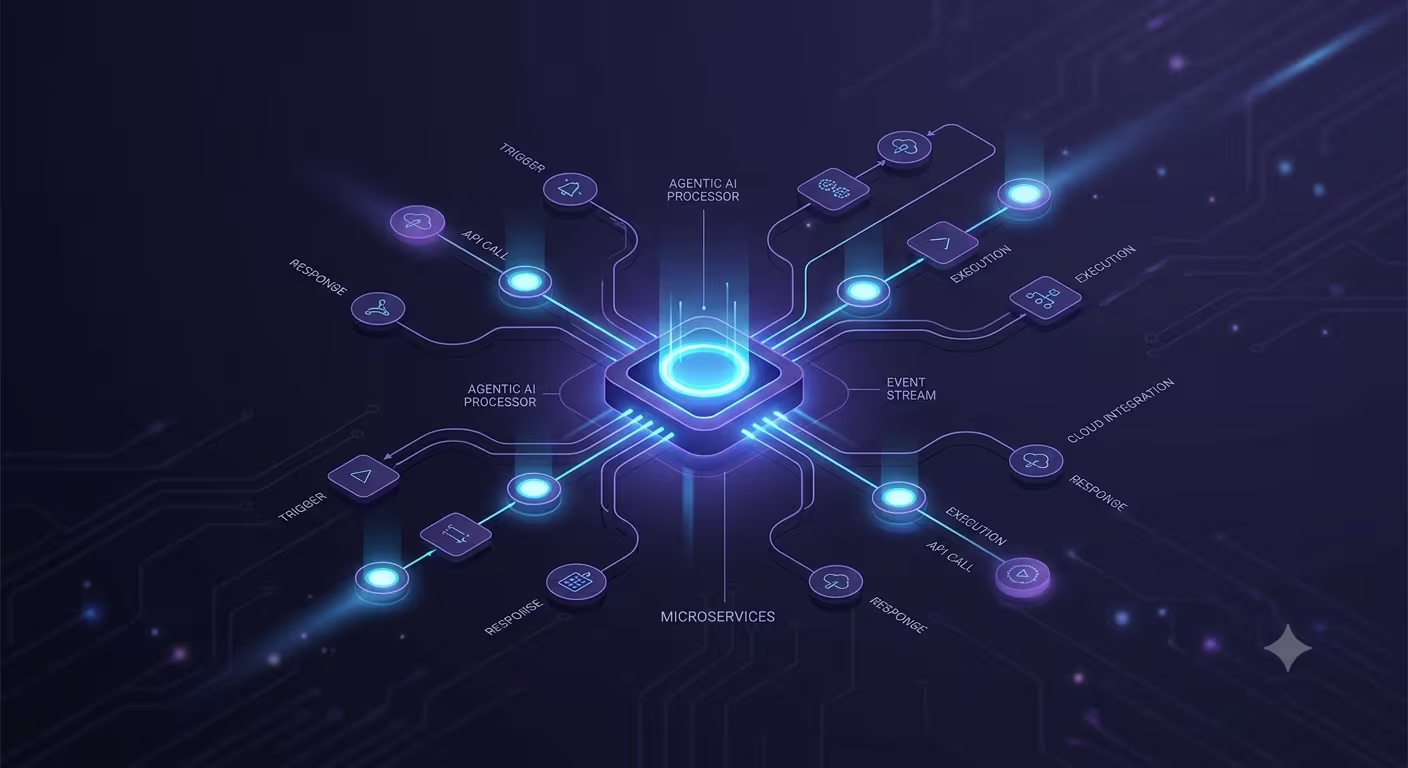
An AI agent is an autonomous software entity powered by artificial intelligence (typically Large Language Models, or LLMs) that can perceive its environment, make decisions, and take actions to achieve specific goals—all with minimal human intervention.
While a chatbot waits for you to tell it what to do step-by-step, an AI agent is goal-oriented. You give it an objective (e.g., "Research competitive pricing for this software and compile a report"), and the agent breaks that goal down into smaller tasks, plans its execution, uses external tools, and completes the work autonomously.
                  ┌──────────────────────┐
                  │      Goal Input      │ (e.g., "Organize a trip to NYC")
                  └──────────┬───────────┘
                             │
                             ▼
                  ┌──────────────────────┐
                  │    AI Agent Brain    │ (Planning & Reasoning)
                  └─────┬──────────┬─────┘
                        │          │
         ┌──────────────┘          └──────────────┐
         ▼                                        ▼
┌──────────────────┐                     ┌──────────────────┐
│  Accesses Tools  │                     │  Takes Autonmous │
│ (Browsers, APIs) │                     │      Action      │
└──────────────────┘                     └──────────────────┘
The Anatomy of an Agent: How Does it Work?
An AI agent isn’t just smarter; it’s structurally different from traditional AI. An agent typically has four key components:
The Brain (The Model): Usually powered by a Large Language Model (LLM), this acts as the core decision-maker, handling reasoning and planning.
Memory:
Short-term memory: Remembers current conversations and intermediate steps of a task.
Long-term memory: Retains historical context, preferences, and patterns over time.
Tools (Actuators): This is where the magic happens. Agents can use external tools—such as web browsers, calculators, databases, calendars, and APIs—to interact with the digital world.
Planning and Reflection: The ability to break down complex goals, analyze feedback, identify mistakes, and adjust its strategy (self-correction).
Real-world Applications of AI Agents
We are already seeing AI agents redefine several industries:
Customer Operations: Beyond basic chat, agents can retrieve customer order histories, initiate refund processes through internal tools, send confirmation emails, and follow up entirely on their own.
Productivity & Personal Assistants: Imagine an agent that doesn't just notify you of an email, but actually drafts replies, books flights, manages calendar conflicts, and coordinates with other people’s agents to schedule meetings.
Software Engineering: Code agents (like Devin) can autonomously browse a codebase, find bugs, write code, run tests, and deploy patches.
Enterprise Workflows: From onboarding new employees to processing complex invoices and compliance checks, AI agents can execute multi-step workflows across disparate legacy software.
The Human-Agent Collaboration (The Future of Work)
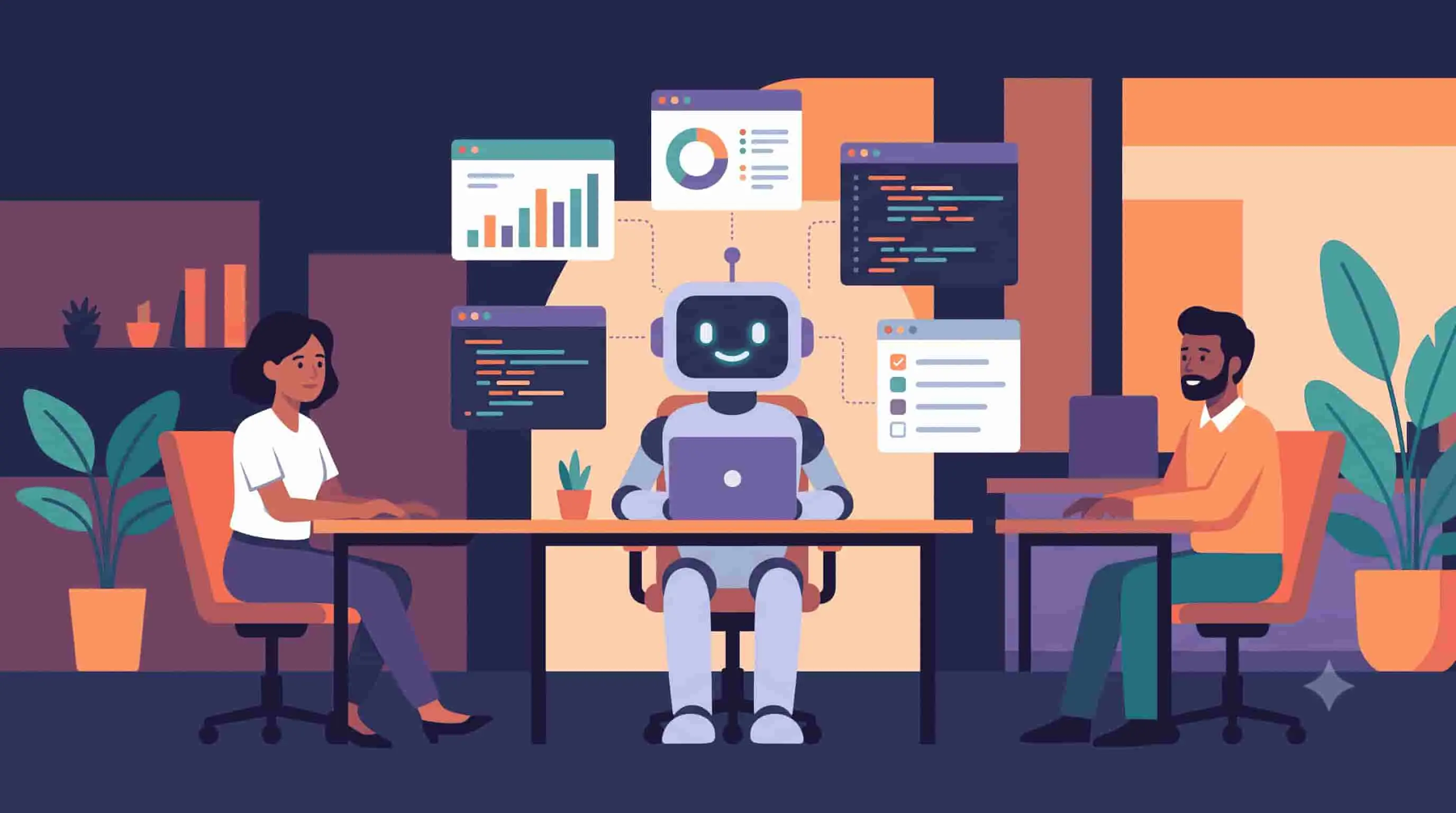
One of the most common anxieties surrounding AI agents is job displacement. However, the most productive future lies in Human-Agent Collaboration.
Agents excel at handling repetitive, information-heavy, and logistically complex task chains, freeing up humans to focus on high-level strategy, creative problem-solving, and critical oversight. They act as tireless, highly capable partners, allowing individuals and teams to amplify their output.
Conclusion
The shift from passive "assistants" to proactive "agents" is more than a technological upgrade—it’s a fundamental change in how we interface with technology. As these systems become safer, more reliable, and better integrated into our everyday digital toolkits, they will redefine what is possible for both individuals and businesses.
What task would you most like to hand off to an AI agent? Let us know in the comments below!

Rohit Bairwa
Published on · 3 min read read