Here is a complete, ready-to-publish blog post on Agentic AI.
Beyond Chatbots: How Agentic AI is Quietly Reshaping System Architecture
For the past few years, the tech world has been obsessed with conversational AI. We got used to typing prompts into text boxes and receiving polished code snippets, draft emails, or quick summaries. But behind the scenes, a fundamental shift is happening: we are moving from passive conversational models to active, agentic systems.
An AI agent isn't just another chatbot. It doesn't sit around waiting for a human to refine its prompt. Instead, an Agentic AI is given a high-level goal, reasons through the necessary steps, selects and invokes tools, and continuously evaluates its own progress until the task is complete.
From Static Prompts to Autonomous Execution
To understand why this is a massive leap forward, look at how the developer interaction model has changed:
Generative AI : Human triggers prompt \rightarrow LLM outputs text \rightarrow Human copies code/text into system.
Agentic AI (Present): System receives event \rightarrow Agent plans workflow \rightarrow Agent calls external APIs/databases \rightarrow Task completed.
Whether it's automatically resolving customer support tickets, running database optimizations, or managing complex ETL pipelines, agentic AI operates like a digital team member rather than a glorified search engine.
Building Event-Driven Agents: The Architecture
A common misconception is that AI agents must run continuously in a 24/7 loop, endlessly checking databases or streaming real-time feeds. In reality, a continuous polling loop is an easy way to burn through your API budget and hit token limits in minutes.
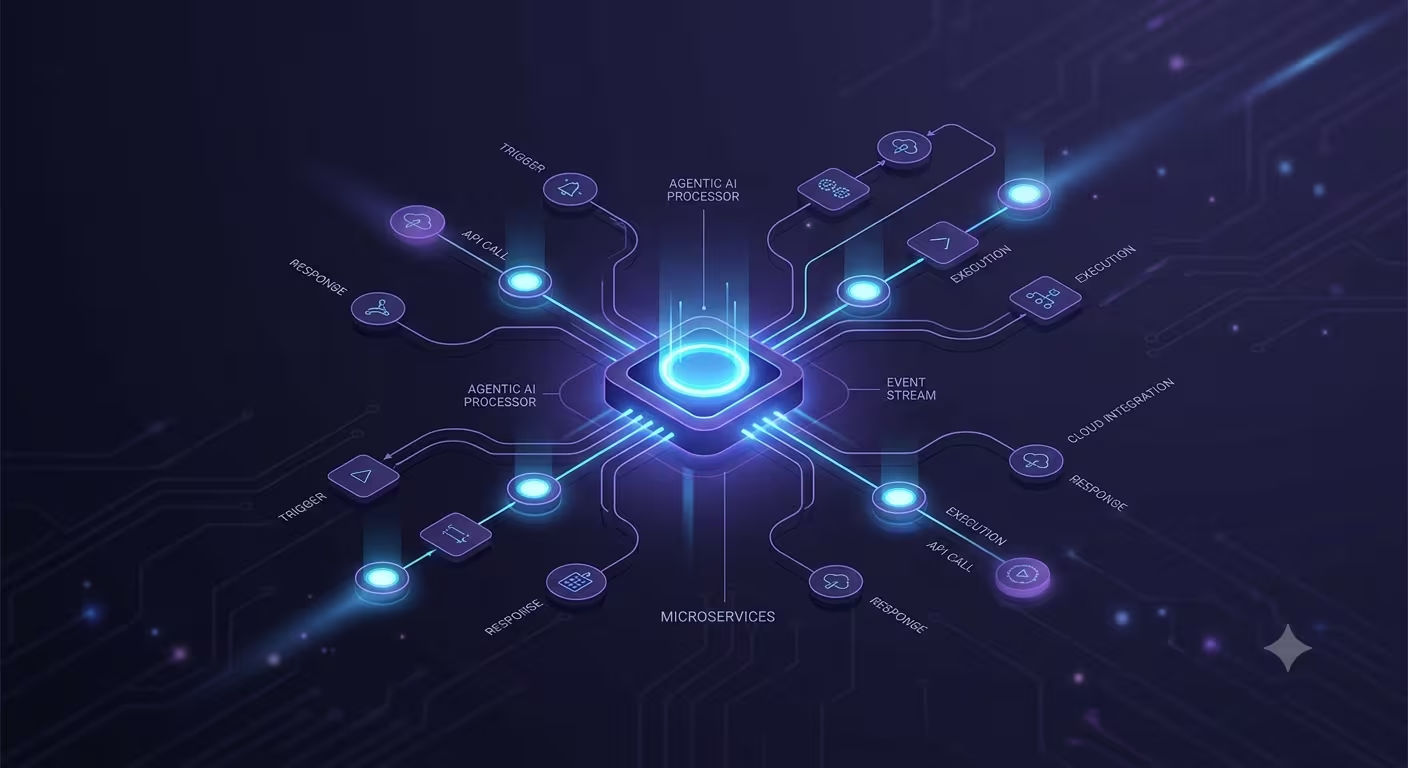
The most scalable and cost-effective approach is an event-driven architecture.
[ Frontend / Service ] ---> (Event: Submission/Webhook) ---> [ Serverless Function ]
|
v
[ External APIs / DB ] <--- (Tool Execution) <--- [ FastAPI / Node.js Agent ]
Key Architectural Rules for Production Agents:
Trigger on Events, Not Time: Hook your agent into application events (e.g., a timesheet submission, a failed build, or an incoming webhook). The event payload wakes up the agent only when there is work to do.
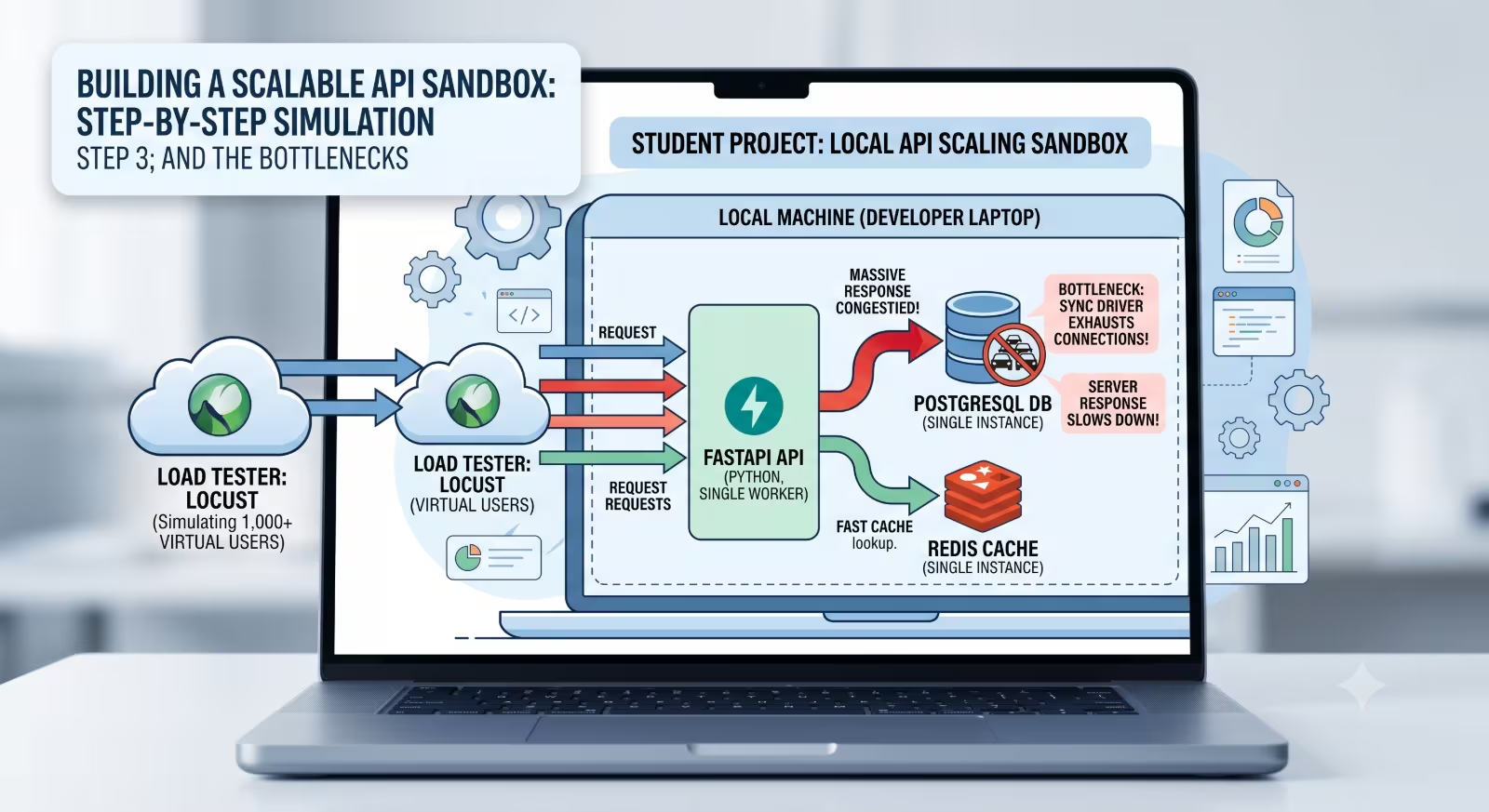
Use Modern Async Backends: Frameworks like FastAPI (Python) or Node.js are ideally suited for orchestrating asynchronous AI calls, tool invocations, and database queries.
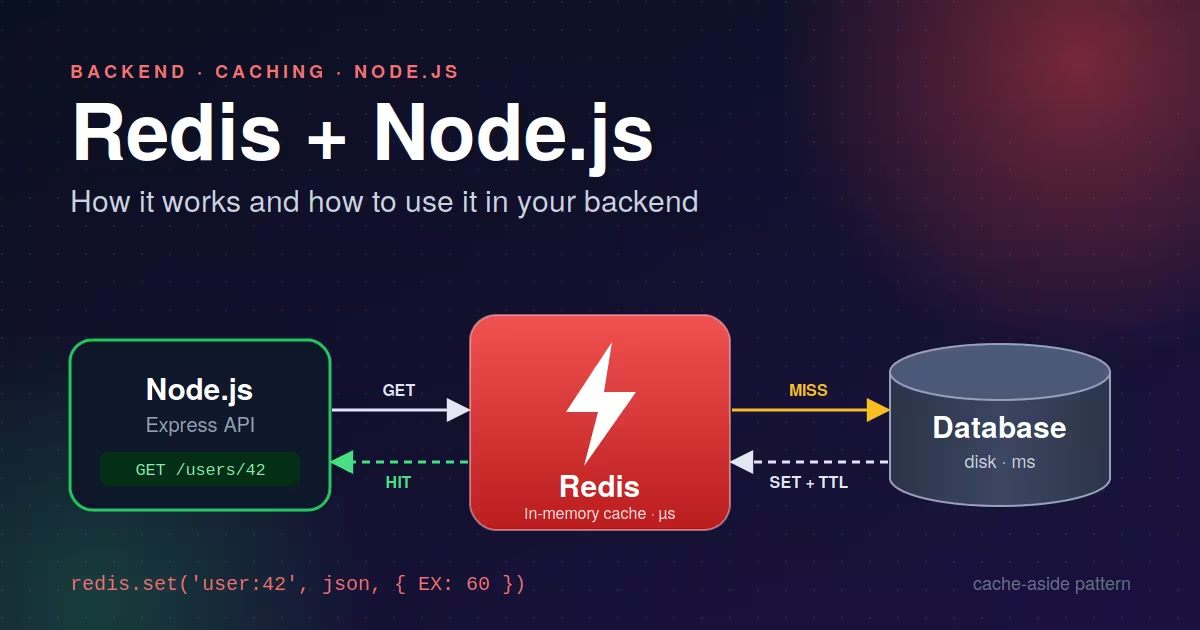
Optimize Memory with High-Performance Caching: Agents need short-term memory to keep track of their reasoning steps. Instead of querying heavy relational databases, modern setups leverage low-latency stores like Redis (or high-throughput alternatives like KeyDB or Dragonfly) behind secure API gateways.
Ephemeral State Management: Once a task concludes, summarize the key outcomes, store them in your primary database, and shut down the agent process to drop token consumption back to zero.
What This Means for Developers
We are reaching a point where software engineering is less about writing static business logic and more about designing boundaries and tools for autonomous systems.

Rohit Bairwa
Published on · 3 min read read